garden legends
a tale of two artists and their earthly delights
Words by Linda Kramer Jenning
Photos by Olya Blase
once upon a time
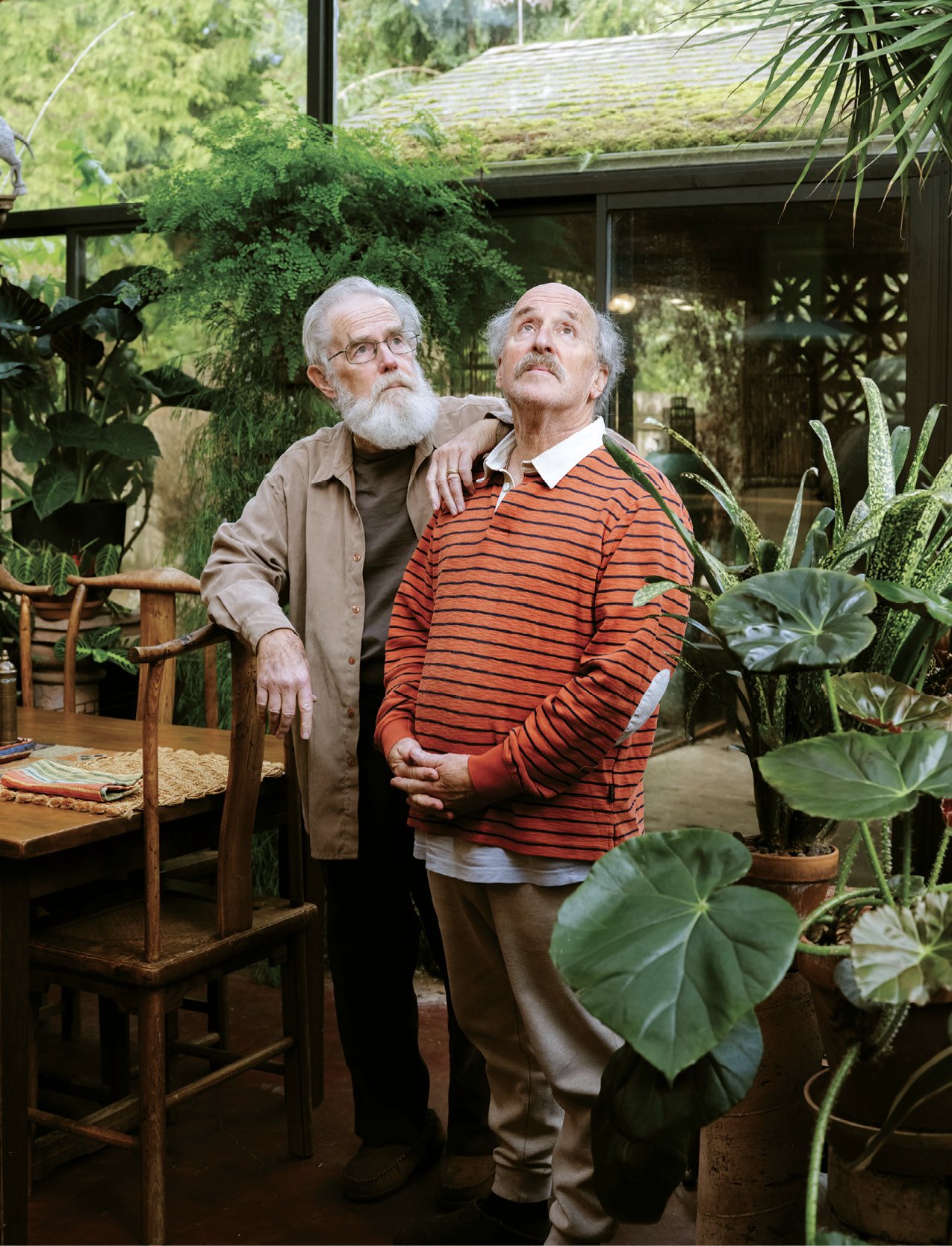
... two youngish men on Bainbridge Island met when one bought a fountain for his yard from the other. They soon discovered a shared passion for gardening that, over the years, blossomed into a shared passion for each other and an internationally acclaimed creative partnership.
The business launched by George Little and David Lewis challenged landscaping conventions and created gardens filled with whimsy and delight, using water features and concrete sculptures resembling ruins from ancient civilizations and oversized flora.
Bainbridge Island Museum of Art (BIMA) is showcasing their work March 6 to June 11 in George & David Lewis: Deeply Rooted. It’s the museum’s kickoff exhibition for Handwork2026, a nationwide showcase of crafts timed to America’s 250th anniversary celebration. The show has given the couple, now retired, a chance to once again share their masterpieces with a wide audience.
“I hope visitors experience the joy we experienced in making it,” says George, 81. “I really hope the joy of creation comes through.”
Their eclectic and stunning works embody the delight George and David found both in working together and in reimagining how to build gardens. After their first meeting in 1988, when George installed a fountain at David’s home, they began collaborating on projects. In 1991, they quit their day jobs to launch Little and Lewis.
They turned David’s garden on Wing Point Way into their gallery, creating spaces and nooks and crannies filled with an ever-surprising mix of plants, shrubs, trees, fountains, pools and Doric columns—14 at one count—along with huge concrete sculptures of leaves, a giant red pomegranate, Roman and Greek heads and whatever else struck their fancy.
“At the height of our career, we would have upwards of 3,000 to 5,000 people come to our garden in a season, with tour buses from all over the country,” says David, 70. “We would even be a destination from Europe.”
If you’re imagining great expanses of gardens like Heronswood or Butchart, instead envision a tiny paradise built in the front yard of David’s property that, including the house, was just one-third of an acre.
“You would walk into the garden and it was made up of vignettes,” says David. “Discovery was important. It consisted of lots of rooms. There was always the sound of water, but you might not see the water feature until you came upon it. We were very clever with height. We had big columns with plants up on top, and we had walls painted in vibrant colors that would hold our smaller pieces of sculpture.”
“We could tell that people left with something that they didn’t arrive with,” David adds. “And I’m hoping that people visiting the exhibition will leave with something that they didn’t expect.”
Building the exhibition took months of research, tracking down and selecting sculptures that had landed in gardens across the country and overseas. Fortunately, much of their work remained on Bainbridge Island and throughout the Puget Sound region.
“What’s intriguing to me is that they made things to complement and enhance environments, but the work doesn’t scream of needing to be the main character,” says BIMA Chief Curator Greg Robinson. “A lot of garden art is ornamental, but I’ve never really thought of their work as decorative. It’s not an add-on decoration like you see with a lot of gardens. It’s integral.”
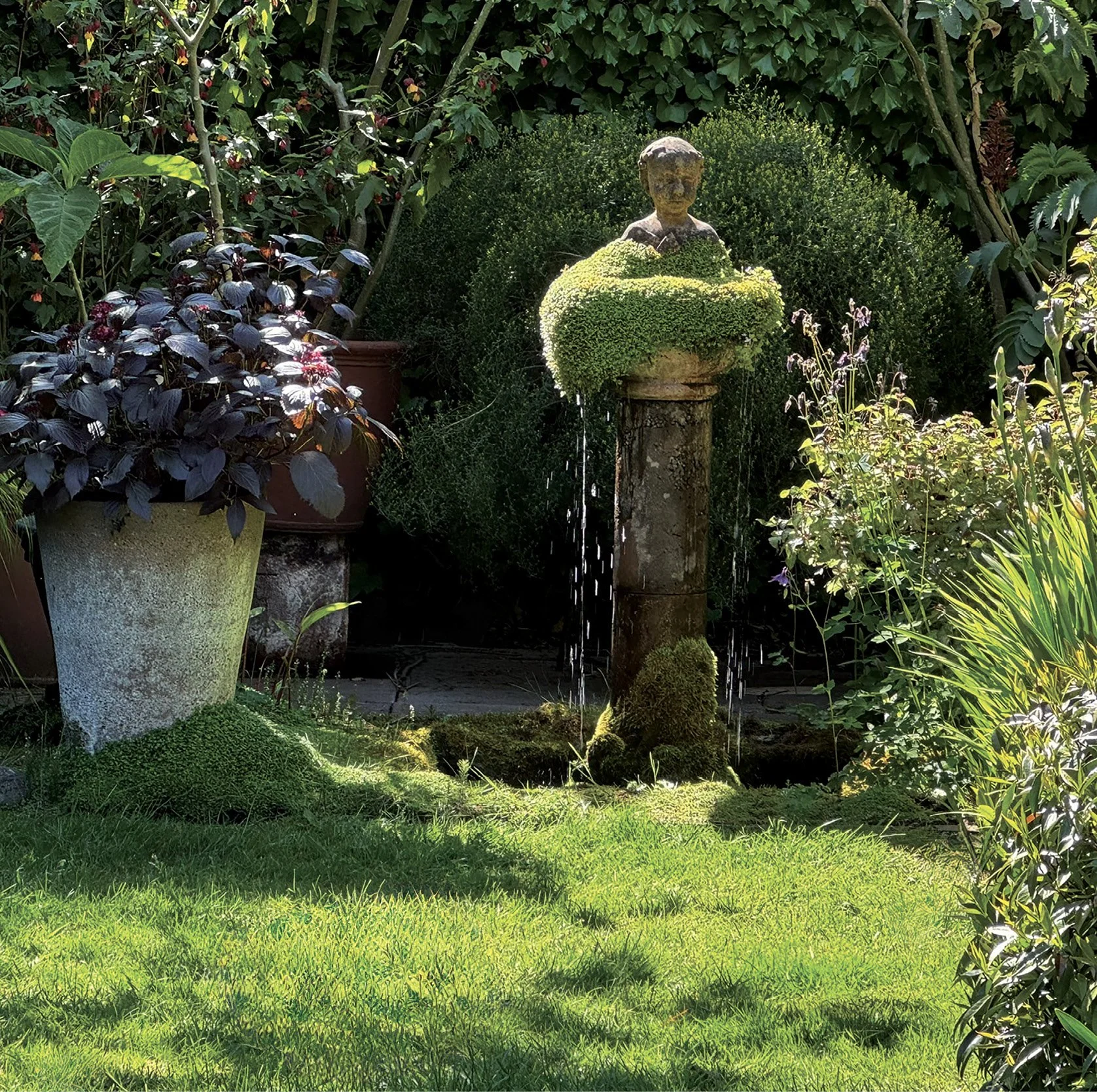
To create their concrete pieces, George and David built molds—some of which are on display in the show—and then added color. “It’s an art form people can understand once they understand mold-making and how you can combine painting with something that is sort of nontraditional in the art world, which I believe concrete is,” says Robinson. “They’ve taken something that’s really pedestrian and made it phenomenal, over the top in scale, in weight, in how environments can mingle into it without getting lost.”
George, a watercolorist who studied art at Jamestown College, began working with concrete when he lived in Houston, making mostly garden sculptures and fountains. He grew up gardening and developed an early interest in archeology. David, raised in Cleveland, studied the classics at Oberlin College, lived in Crete and Greece, and illustrated archeological finds. Gardening became a lifeline for him while grieving the loss of his partner from AIDS.
As Little and Lewis grew, so did George’s and David’s support of nonprofits, including IslandWood, Bloedel Reserve and BIMA, where David served on the founding board. In 2007, they were honored with the Island Treasure Award. The title of the upcoming BIMA exhibit, Deeply Rooted, reflects both their long history of community engagement and the nature of their work.
Preparing for the exhibition gave George and David a chance to walk down memory lane and reconnect with many of their creations. The couple will participate in a special artists’ talk at BIMA on April 4. “It’s been gratifying,” David says. “The exercise of creating this show and bringing our work together is sort of a validation of all the years we did this work.”
Their approach to garden design was always intuitive, and beware the client who showed up with landscape blueprints. “They would roll them out, and I would absolutely go into a coma,” says David. “That was not the way we gardened. It was simply waking up one morning and saying ‘Let’s put a fountain there.’ We were always risk-taking. That didn’t always work out but sometimes it did.”
One successful risk involved tropical plantings (see sidebar). “We were fortunate to be part of the burgeoning interest in tropicalismo plantings,” David says. “While we don’t take credit for introducing them to the Pacific Northwest, we did incorporate the love of tropical plants into our garden, which many people had not seen before in this area.”
They also introduced elements like painted masks, inspired by spending time at their second home in the culturally rich city of San Miguel de Allende, Mexico. They loved the vivid colors there and developed their own signature hue, which became known as “Little and Lewis blue.” Despite requests, they never shared its formula.
At the garden’s heyday, Martha Stewart came to Bainbridge to do a show on Little and Lewis, and Canadian Broadcasting featured them in a series on famed gardens around the world. In 2005, George and David published the beautifully illustrated A Garden Gallery: The Plants, Art, and Hardscape of Little and Lewis.
As the business flourished, so did their personal relationship. George legally changed his last name to Lewis, and they married in 2013. The wedding took place at the home of Debbi and Paul Brainerd, founders of IslandWood, whose garden includes works by the two sculptors. That was also the year George retired, with David following suit a couple years later.
“I said once I turned 70, I was not lifting another bag of concrete,” George recalls.
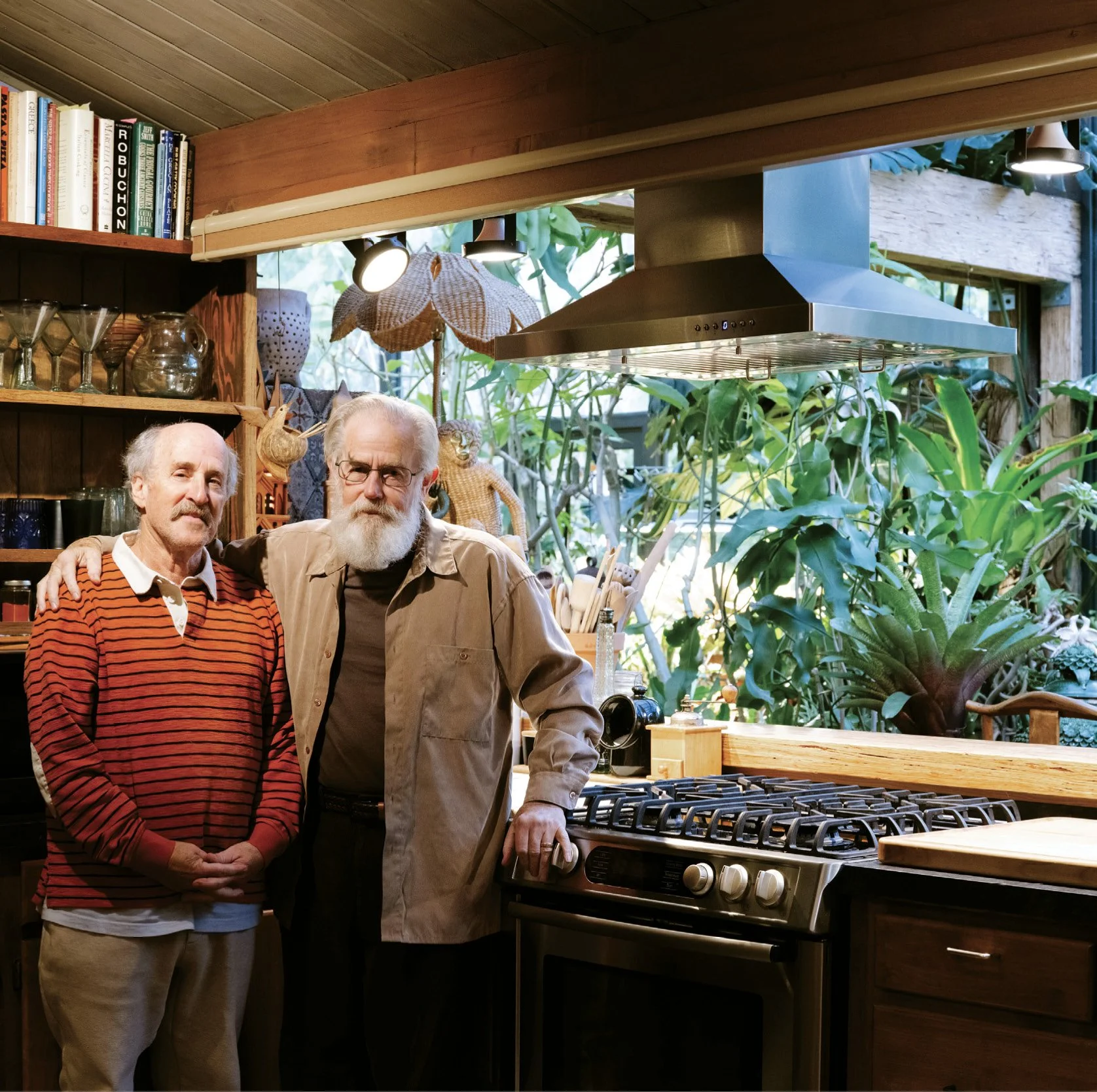
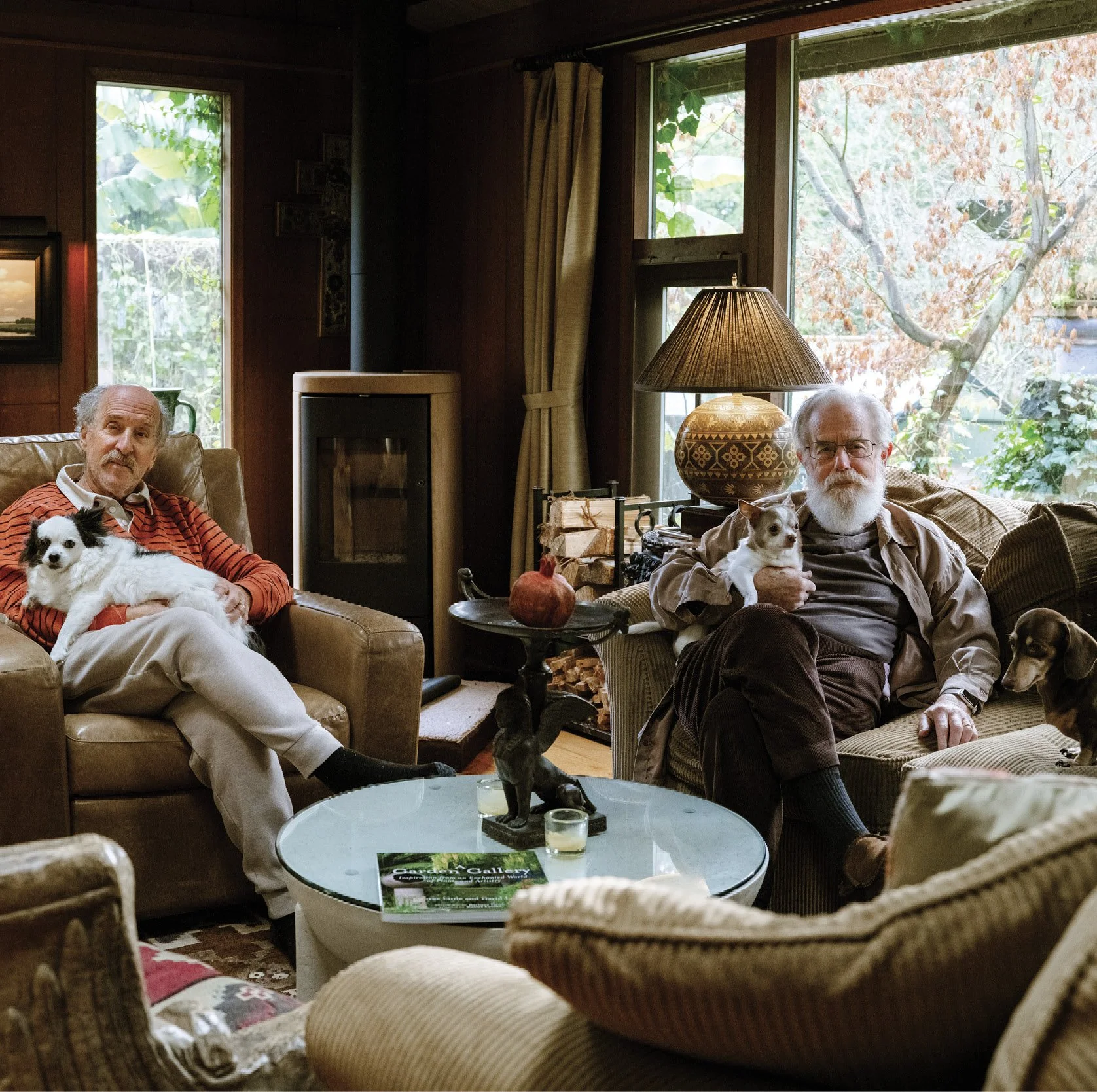
By then, the couple had sold their showcase property and moved into the house next door, which they now share with their chihuahuas, Byron and Orbit, and dachshund, Ava. The home is like their gardens, a series of rooms filled with their own creations and treasures from extensive world travels, artfully placed to surprise and engage the eye. It includes a solarium where they can tend plants year-round and, of course, another small and magical garden.
“It’s very personal,” David says, noting they only show the garden to invited guests.
For George, the magic of gardening endures. “I feel myself to be aware of being when I’m gardening. The earth is an organism, and when we garden we’re part of that. That’s part of why I love gardening so much, because it’s an exchange with the earth.”
George has had health issues in recent years that have curtailed their travels. David says his main mission these days is caring for George and savoring their time together, especially in their garden. “It’s the idea of just being together and working together,” David says. “It’s a shared experience and connection. Those moments are gifts as we age.”
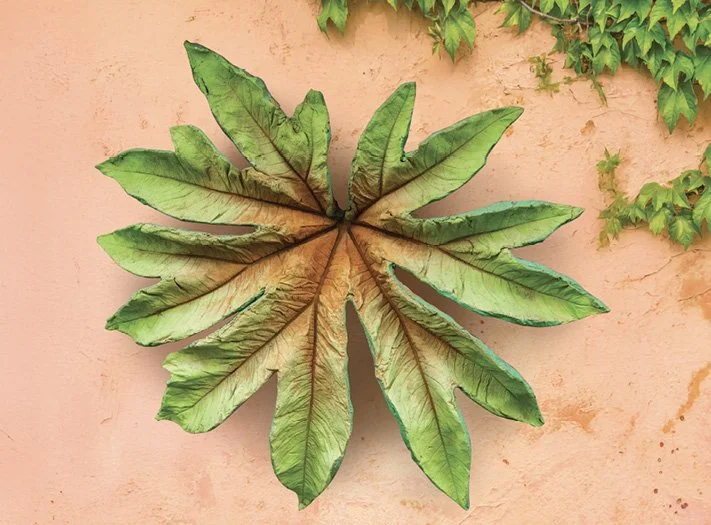
Little and Lewis, The Last Tetrapanax 2005, cast concrete (Photo: courtesy of Bainbridge Island Museum of Art)
the year of crafts
Greg Robinson, chief curator of the Bainbridge Island Museum of Art, embraced the idea and decided BIMA would showcase crafts throughout 2026, launching on March 6 with George & David Lewis: Deeply Rooted and Crafting Futures: Emerging Artists Invitational. Summer craft exhibits open July 3 will include Indigenous Craft, with guest curators Robin Little Wing Sigo of the Suquamish Tribe and Miranda Belarde-Lewis of the Zuni and Tlingit Tribes.
Meanwhile, Bainbridge Artisan Resource Network (BARN) will host Handwork Week from April 26 to May 1, offering a series of intensive workshops with renowned artists and craftsfolk. Participants will learn to craft a range of objects, from Salish-style cedar boxes and baskets to bronze bells and modern mobiles.
BIMA’s Robinson says there is no one strict box that defines craft. “Historically, craft could be seen as things that might have an artistic element but they’re functional like a hooked rug or ceramic. Functionality separates craft from a piece of art.”
going tropical
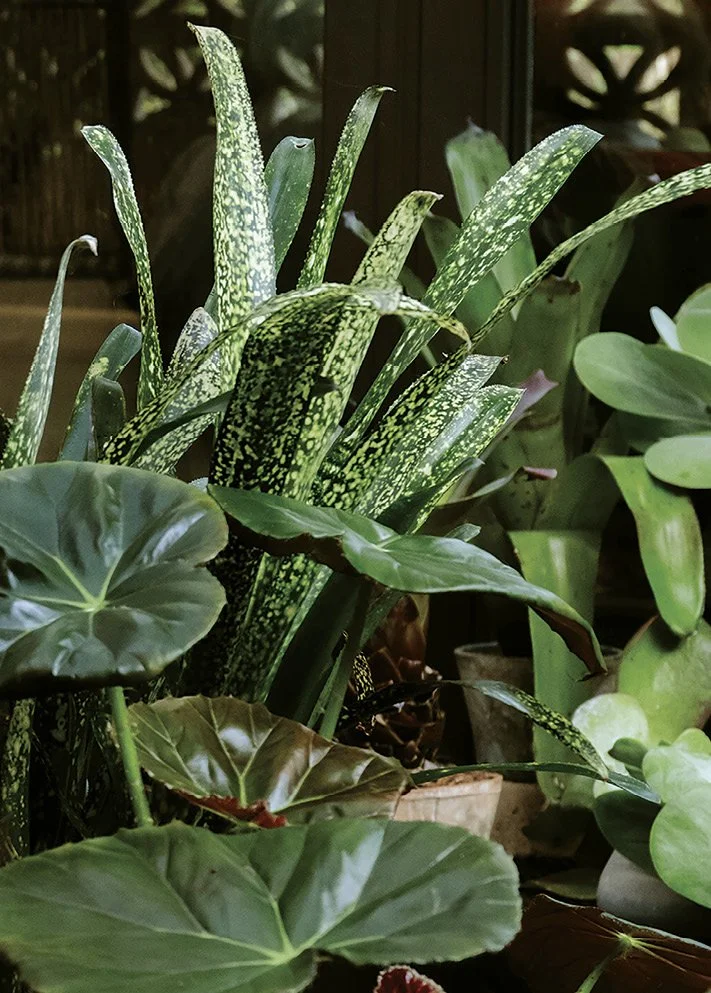
Even in the Pacific Northwest, George and David Lewis found that tropicals could thrive in a garden and add glorious color, fragrance and texture. They planted them in the ground and in pots and rotated more fragile ones to a greenhouse during the coldest months. Listed here are some of their favorites, “all of which we still have in our garden today,” David adds.
Musa basjoo (hardy banana),
Abutilons (flowering maple)
Brugmansias (trumpet flower)
Lotus
Tropical water lilies
Begonias
Calla ‘Hercules’
Tasmanian tree fern