
how ‘bout that?
An evening with West Sound Roller Derby
Words by Heidi Watson
Photos by Olya Blase
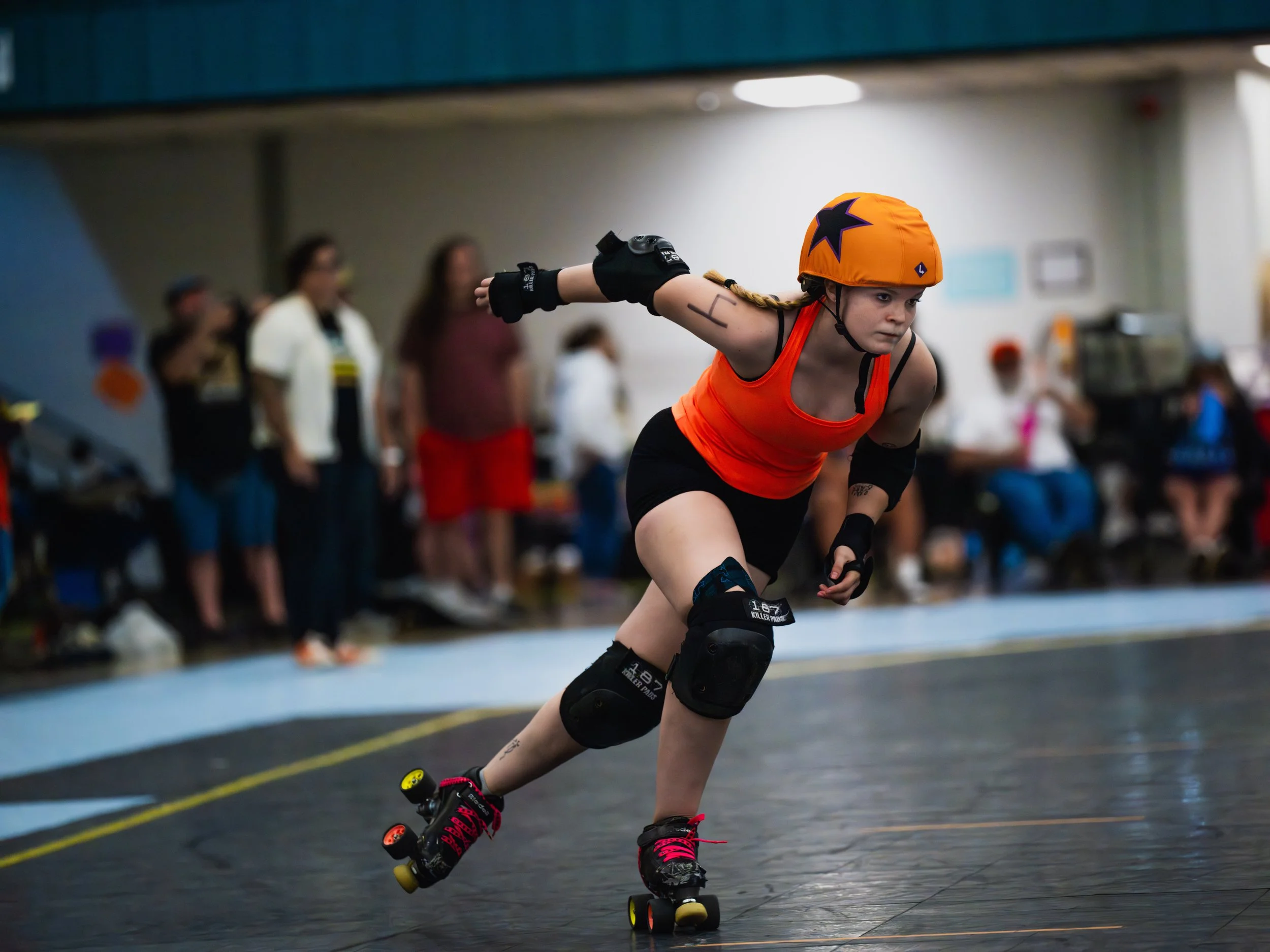
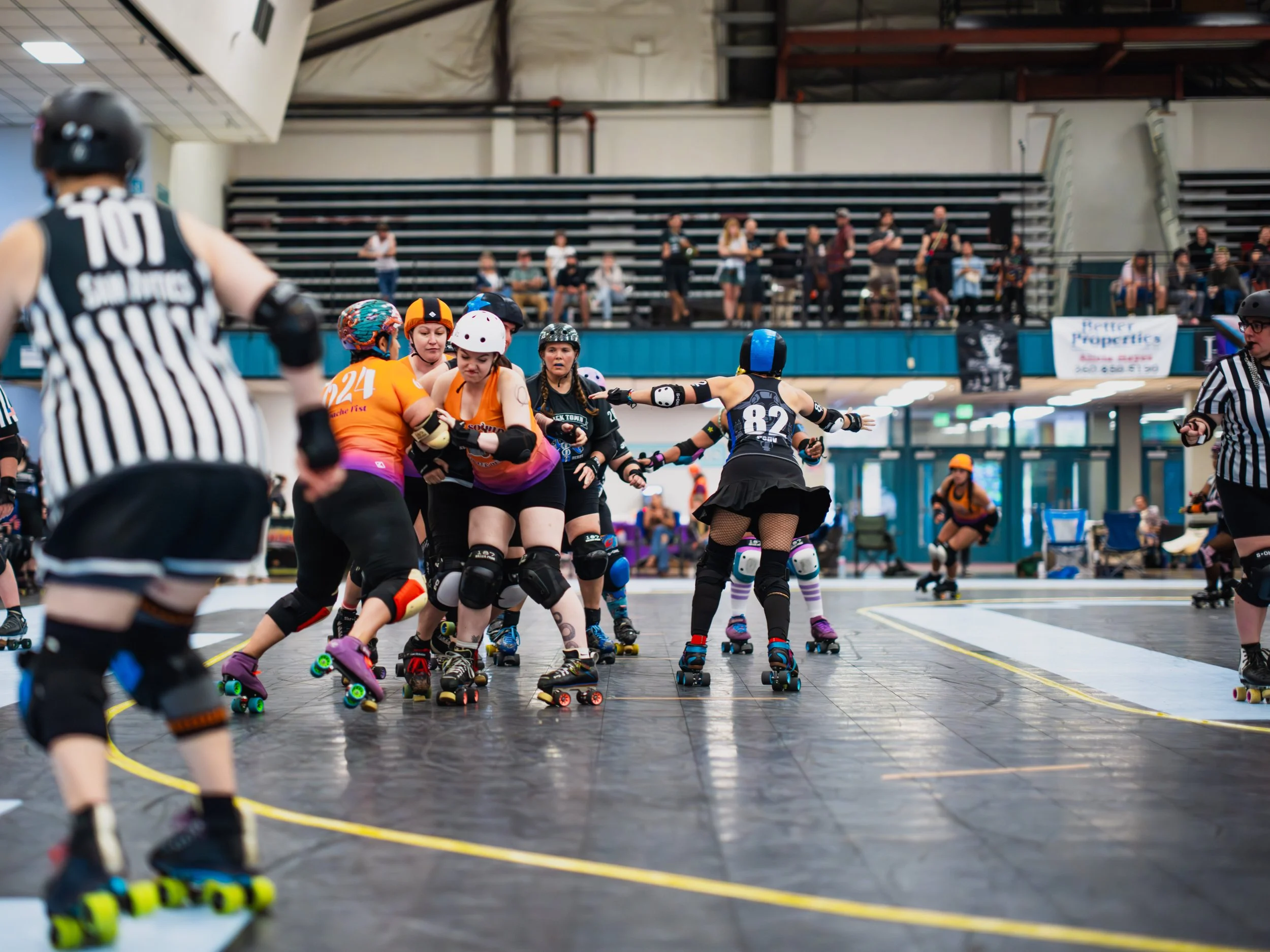
The energy in Kitsap Sun Pavilion is equal parts dance party and rugby. While upbeat music thumps from the DJ booth, wheels clatter and whir on the track. Shouts and grunts come from the pack of players pushing, elbowing and slamming into each other. Someone goes down hard only to be jumped over by a competitor. They’re all on skates, and they’re all women with derby names like Squirrelly Temple, Twisted Spinster and Rosie Basher.
Welcome to West Sound Roller Derby (WSRD), Kitsap County’s only adult flat track roller derby team. Founded in 2012, the goal of the Bremerton-based organization is to help skaters develop athletically and mentally in an inclusive community while having fun. The team sees themselves as, “a reflection of Kitsap County: tough, loud, creative, but together. It’s community,” says head coach, Ash Sparks, aka Hellen Killer.
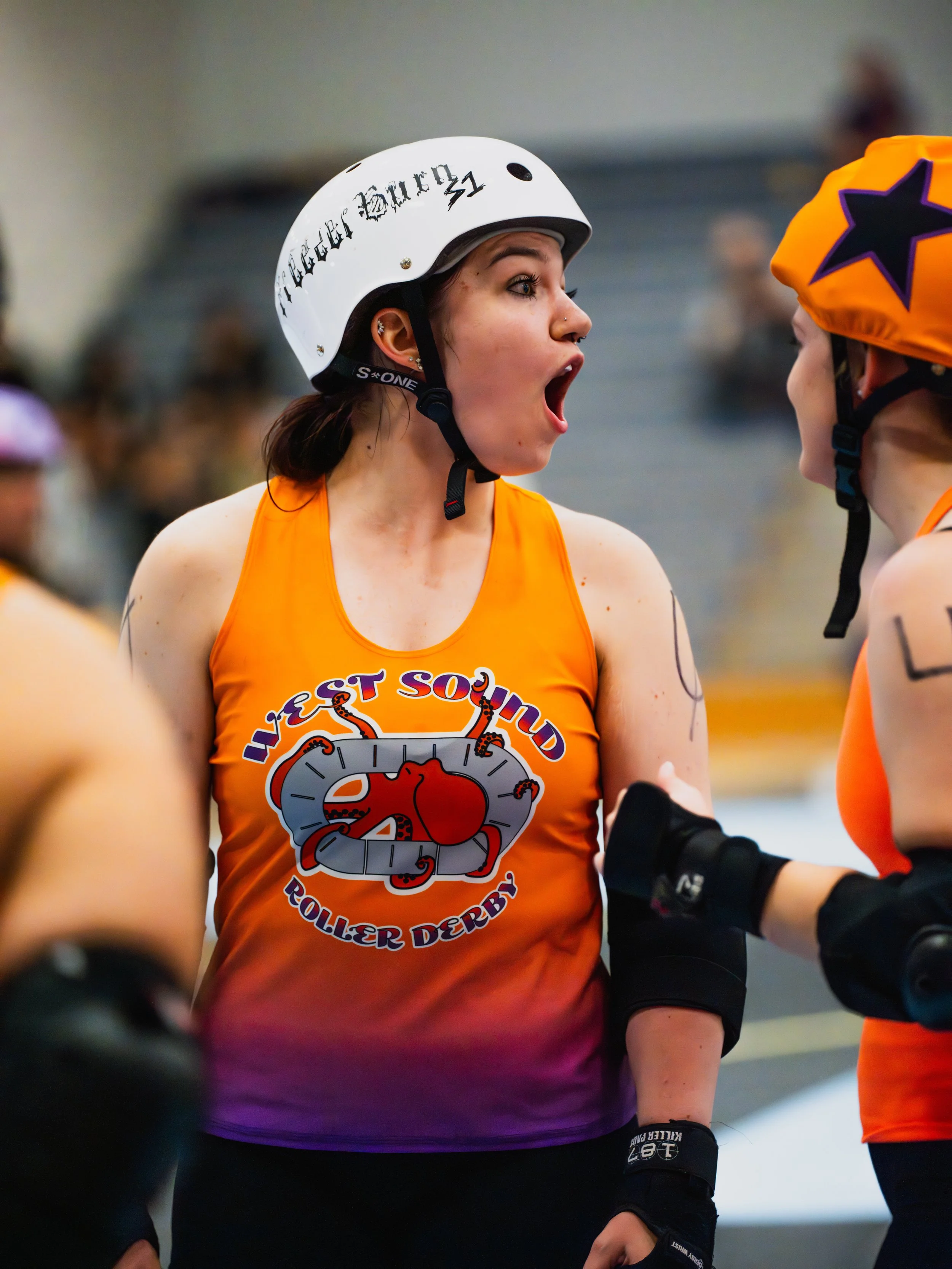
That sense of teamwork and community—along with competitiveness and hard-hitting action—extends across the sport. “I think it’s the sport for sportsmanship,” says skater Freezer Burn, aka Freeze. “I have been in plenty of games where I’m blocking, and I’ll fall, and they fall, and we both say, ‘I’m so sorry!’ or, ‘Oh my gosh, are you ok?’”
Flat track roller derby competitions (or bouts) are made up of a series of “jams” with a field of four “blockers” and one “jammer,” whose goal is to score points by passing opposing blockers. From the first whistle, opposing sides become one pushing, spinning and falling pack of sheer power, strength, balance, with just a hint of acrobatics, until a jammer, sporting a large star on her helmet, breaks through and flies around the track.
We’re not talking violence or recklessness here—long gone are the days of black eyes and broken noses. The Women’s Flat Track Derby Association, the sport’s international governing body, sets strict rules and regulations. Referees send players to the penalty box throughout the bout, a medic is always track-side and skaters look out for each other’s wellbeing even on opposite teams. After two opposing players wiped out at the bout I watched, they skated off the track together, smiled and bumped fists.
“You’d think they’re hard and tough,” says Freeze, also the team’s promotions lead. “But anyone could be in roller derby.” Or just about. Skaters must be over 18 and women or gender expansive folk. They include moms, nurses, shipyard engineers, enlisted Navy and teachers of all athletic abilities, sizes and backgrounds. Freeze says it’s the most inclusive group she’s ever seen.
You don’t even have to know how to skate to join. WSRD has a new skater program that supports women of all levels—from people who’ve never been on skates to those who just need a refresher. The program fosters players through three skill levels and teaches them the rules of roller derby before they compete.
A registered 501c3 since 2015, WSRD is 100% volunteer-run. Players must serve on committees, attend meetings and put up flyers for events, in addition to practicing and playing. “Derby to me is all about community and connection,” says Cypher, a WSRD skater since 2017. “I have met good friends and have cherished memories with folks I would have never met without derby. It brought me into a group of powerful people and has helped me become a better person overall.”
In the spirit of derby, the crowd is as diverse as the team—from babes in arms to couples on date nights, retirees sitting trackside in camp chairs and Navy shipmen cheering from the beer loft. “People around here love sports,” says Freeze. “Everyone just needs a home team to root for.”
derby lingo
Apex Jump: A jammer’s leap over the track’s inside corner to legally bypass blockers and score points.
Grand Slam: When a jammer succeeds in lapping the opposing team’s jammer, scoring 5 points in a single pass.
Hip Whip: A form of assist in which a player (usually the jammer) grabs her teammate’s hips to swing herself forward.
Pack: The largest group of blockers from both teams skating together. Jammers must pass through them to score.
Pivot: A blocker who can switch positions with the jammer to score points. They wear a stripe on their helmet.
Power Jam: When one team’s jammer is in the penalty box, giving the other team a scoring advantage.
Star Pass: When the jammer hands the star helmet cover to the pivot, transferring jammer status.