
Keeping Kitsap Green
The influence of Kitsap Environmental Coalition
Words by Cooper Castelle
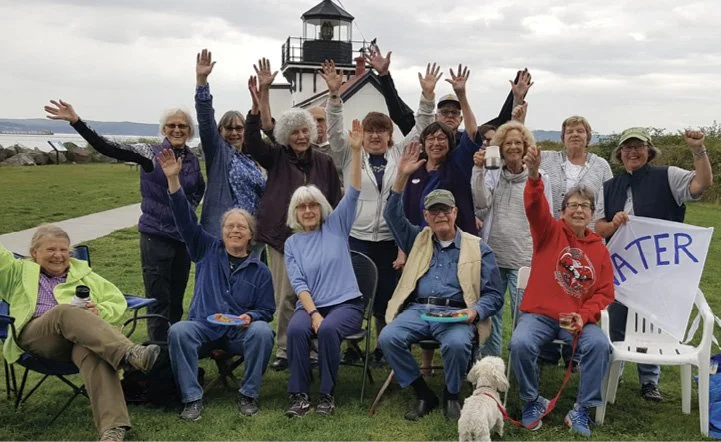
Beverly Parsons (front row, middle) and team celebrate the launch of the Kitsap Environmental Coalition in Hansville (Photo: courtesy of KEC)
On a sunny afternoon last June, four candidates for Washington's 23rd District state representative seats gathered at Kingston's Village Green Community Center to field questions from dozens of Kitsap County residents. The two-hour eco forum, hosted by the Kitsap Environmental Coalition (KEC), centered on environmental policies that affect local communities.
"Our motto is Keep Kitsap Green," says KEC board member Beverly Parsons. "That's why a lot of us live here; the beauty of the nature that we have."
Formed in 2018 by a group of citizens concerned about aerial spraying of toxic chemicals near residential areas, KEC has since grown into a nearly 1,000-volunteer-strong community network of county staff, elected officials, students, retirees and engaged residents. Guided by a philosophical framework that sees nature as having inherent value, the nonprofit community education organization addresses such issues as climate resilience and preservation of rural character through thoughtful, science-based conversations and advocacy initiatives.
When the Department of Natural Resources approved Pope Resources' proposal to aerially spray chemicals, including glyphosate (Roundup), over its 330-acre property adjacent to residential properties along Hansville Road, local residents resisted. They raised $16,000, filed an appeal, held a public meeting and protested outside Pope's Poulsbo headquarters. They established KEC and ultimately persuaded Pope Resources to permanently cancel its plans.
Following this initial success, KEC now engages professionals in disciplines spanning scientific research, communications, public service and nursing—all working to champion the protection of Kitsap County's interconnected environment. "To see the amount of people who are concerned about preservation of nature is just very inspiring," says Parsons.
KEC's recent efforts are as diverse as the coalition itself. They partnered with Kitsap Conservation District on the Kitsap Farmers Fighting Hunger campaign, signed a letter to Governor Ferguson advocating for legacy forest protection and worked to convert Eglon Forest in North Kitsap from timberland to a 700-acre county park. The coalition also hosts monthly educational programs on environmental topics and organizes hikes, tree plantings and citizen science projects.
"Keeping Kitsap Green" also means championing a concept known as Net Ecological Gain, a policy requiring developers and planners to mitigate environmental degradation and create positive gains for nature. By fostering an informed and engaged public and partnering with local conservation organizations, KEC endeavors to protect rural Kitsap from large-scale residential overdevelopment and restore its forests, such as the Port Gamble Forest Heritage Park.
As a testament to the power of KEC's public mobilization, Kitsap County passed a resolution to halt government glyphosate spraying on public land, except as a last resort to control noxious weeds. That enduring community influence was on full display again in June as local politicians used KEC's platform to discuss their respective strategies for managing Kitsap's natural landscapes. As the packed room at the forum in Kingston proves, Kitsap residents care deeply about protecting the natural character of their home, and KEC is increasingly influential in ensuring they have the collective power to keep it that way.