
shooting stars
Words by Nancy Blakey
Illustrations by Mary Jo Davis
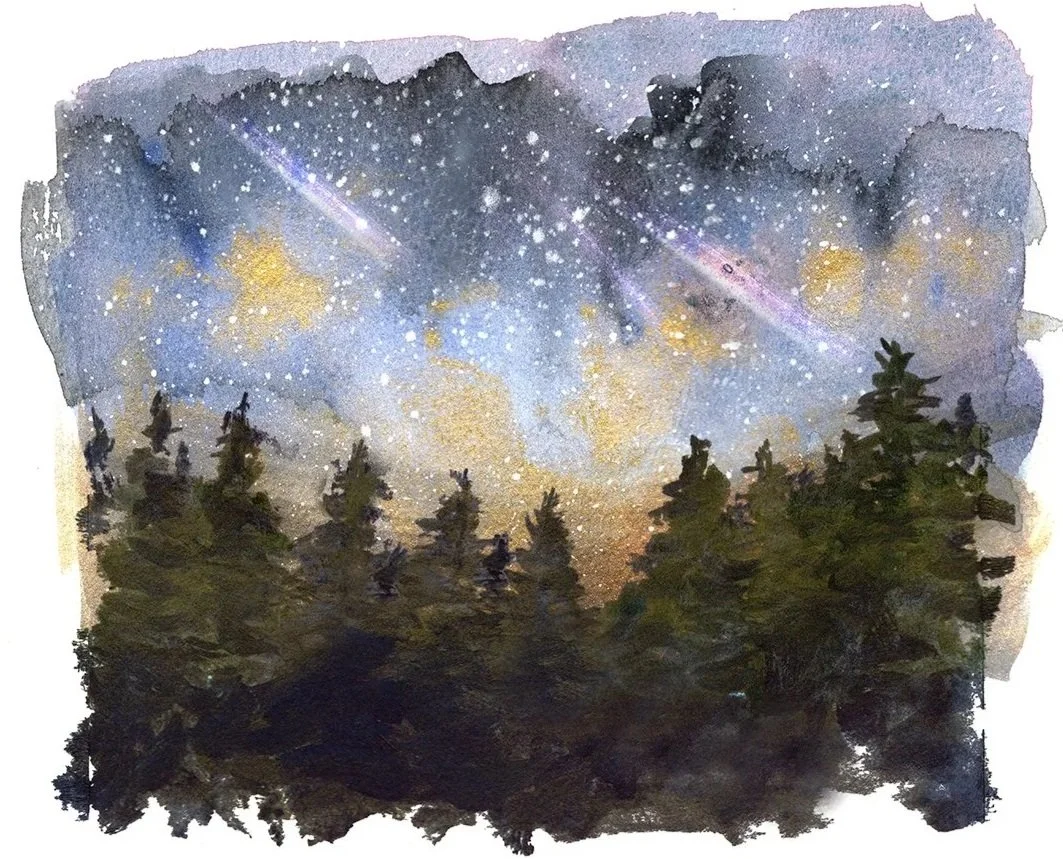
Every August, the Perseid meteor shower turns the night into a slow-burning fireworks show, where every streak of light feels as if the sky briefly remembers how to fall. Widely considered the year's most spectacular meteor display, it peaks between August 10 and 12 as Earth passes through dust and debris left by the comet Swift-Tuttle.
For years, our family watched this dazzling display from an old trampoline in the backyard. We spread out blankets and pillows, tipped our faces skyward, and let our busy lives fall away as the heavens filled with shooting stars. It was simple, quiet magic—the kind that makes memories.
The best part? You don't need special equipment or to travel far. The Olympic Peninsula is one of the best dark-sky regions in Washington, with Hurricane Ridge the top spot for meteor watching along with Crescent Lake and the Sequim-Dungeness area. Your backyard is a fine place to watch. All you need are clear skies and a little patience. The Perseids are famous for their vivid colors and frequent fireballs that light up the sky. So look up! There are shooting stars out there.
Tips
- Head somewhere with a wide, dark sky, away from city lights if possible. A bright moon can dim the show, but the strongest meteors will still shine through.
- Lie flat on your back for the best view and look toward
the northeast near the constellation Perseus, where the meteors first appear. - Be patient and stay up late. Peak viewing hours are typically after midnight through the early hours before dawn.
- While they radiate from Perseus, meteors can streak across any part of the sky—so keep your gaze open and wide.
- Battlepoint Observatory (bpastro.org) is an excellent astronomical observatory on Bainbridge Island with weekly planetarium shows and scheduled events throughout the year.
Save the Night Sky
In many cities, light pollution makes the night sky hundreds of times brighter than a natural starlit sky, robbing us of the view of stars. Fortunately, you can help by contributing real data to community science projects.With the Loss of the Night or Globe at Night apps (globeatnight.org), you can measure and report local light levels via your smartphone and contribute to a global database of light pollution. The apps guide participants to locate specific stars and report how clearly they can see them, helping researchers track changes in night sky visibility over time. Or become a DarkSky Advocate with DarkSky Olympic Peninsula, a group dedicated to responsible lighting that protects night skies, supports public and ecological health and saves energy (darkskyopwa.org).