
serene retreat
RUNNING BUDDIES STAY IN STEP TO BUILD A DREAM HOME
Words by Linda Kramer Jenning
Photos by Emily Barrows
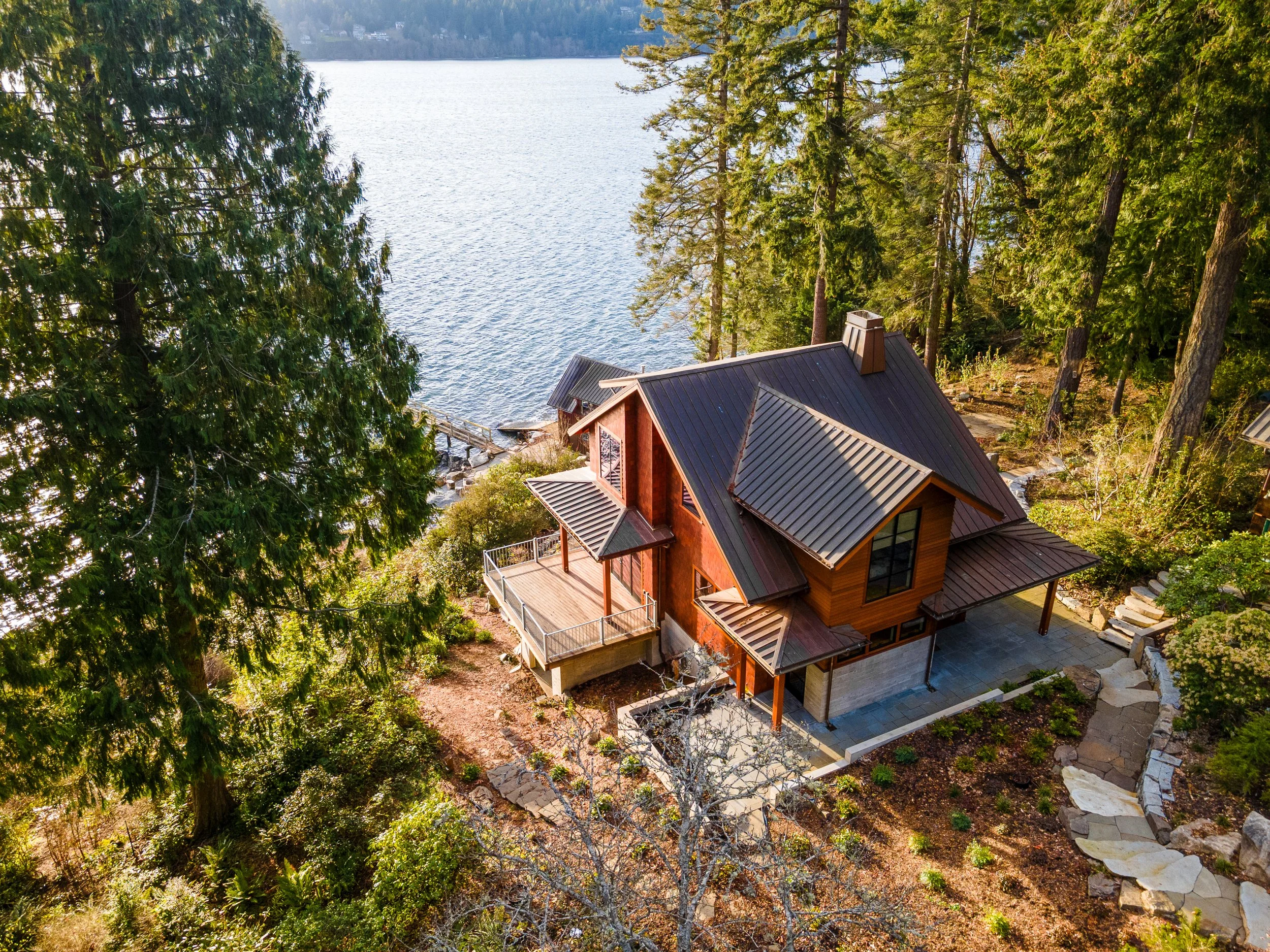
Over three decades ago, Fred Turkheimer bought a shingle-sided house with leaded windows built in the 1930s along the Bainbridge shoreline. Now he’s torn it down.
The years took their toll on the beloved house on Crystal Springs Drive, forcing Turkheimer to make the difficult decision. “It was beautiful,” he says. “I kept it alive as long as I could. It was kaput.”
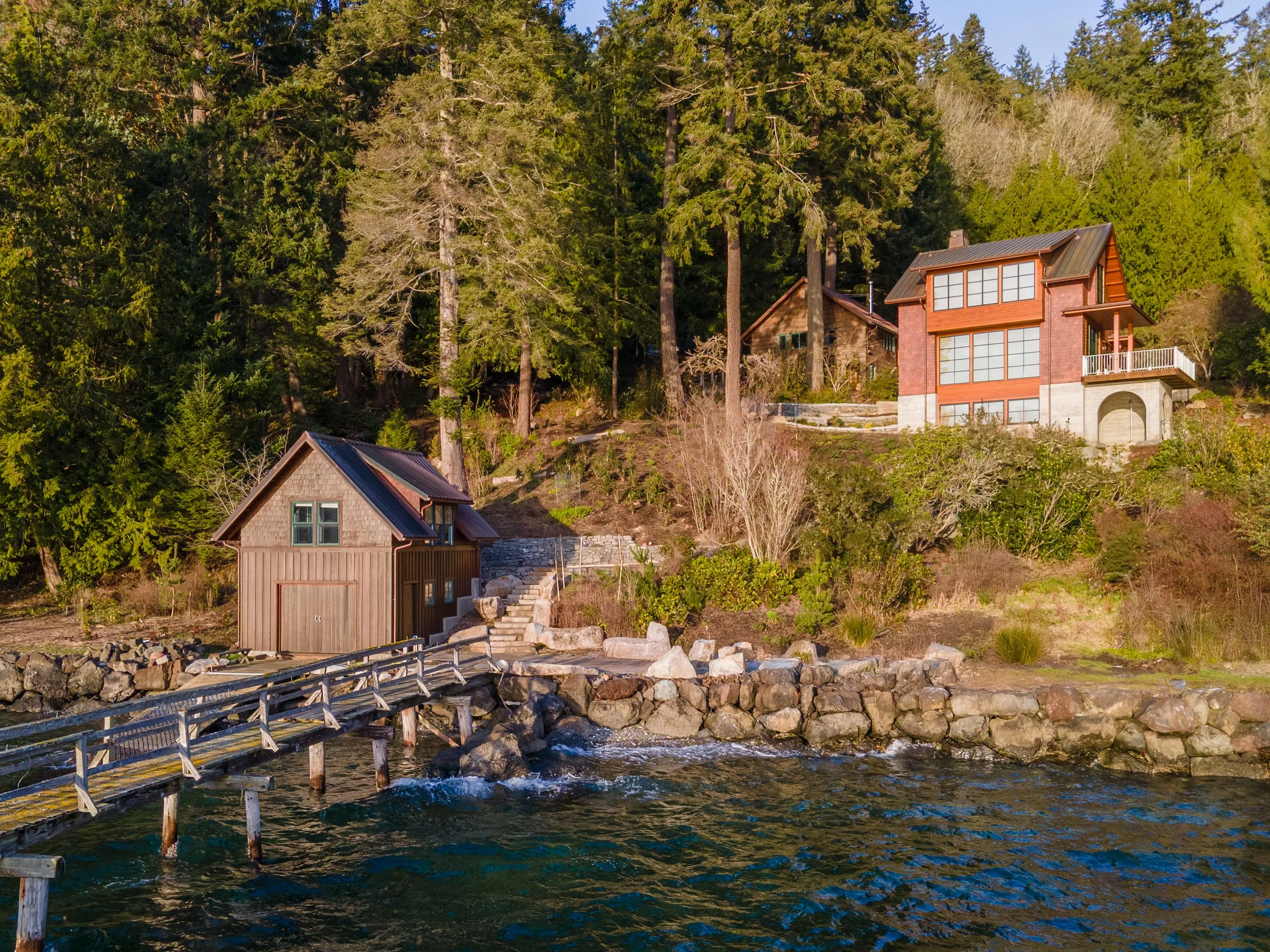
Turkheimer talked over what to do with architect Charlie Wenzlau while on their regular runs around the Lynwood Center neighborhood. Wenzlau had already helped his pal turn an old boathouse on the five-acre property into a cozy cabin. Now he agreed that it was time to do something about the main house.
The house would have to go, but Turkheimer and Wenzlau decided to rebuild on the same site with the same footprint.
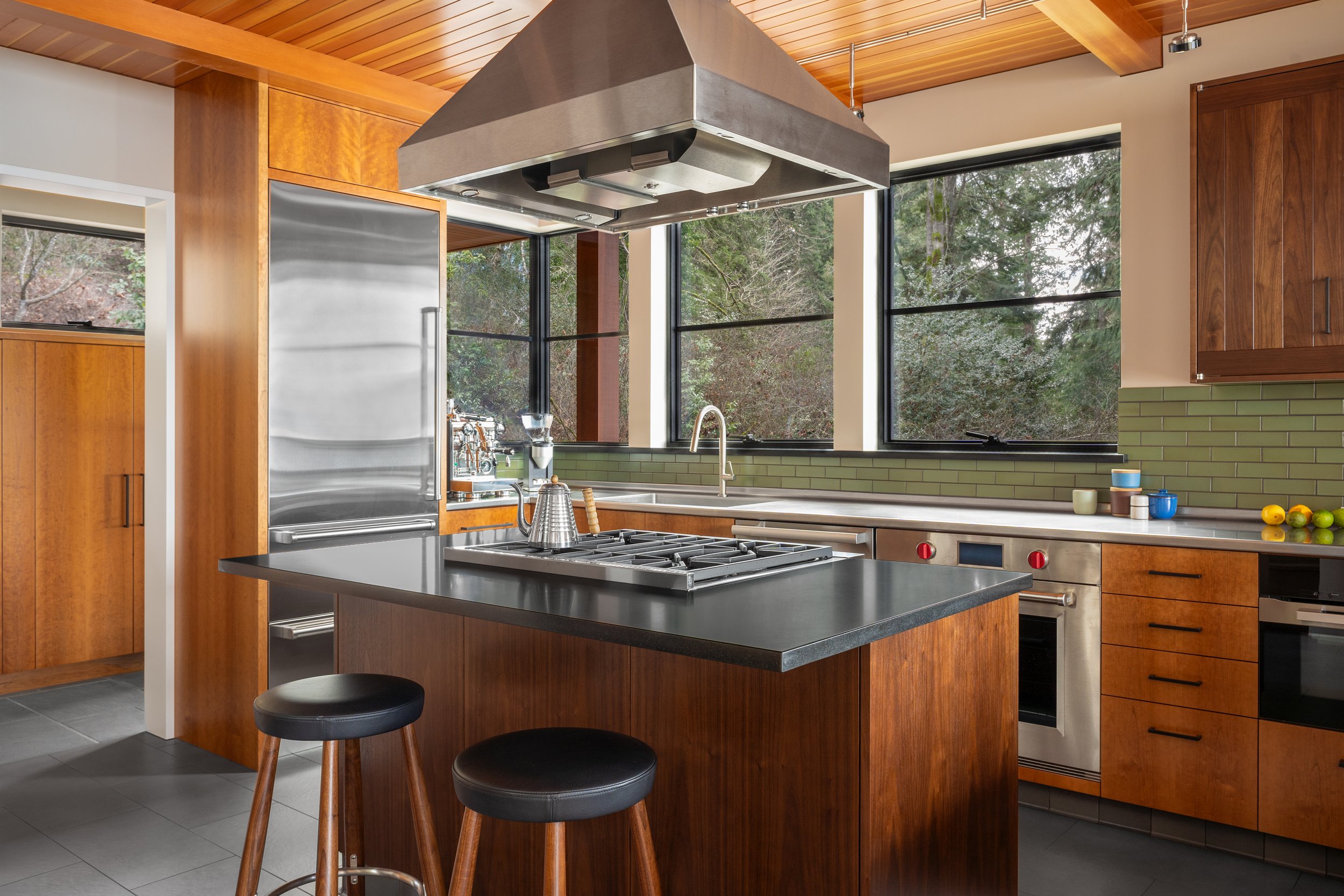
“I wanted to be able to live here comfortably, but not have too big of a footprint,” says Turkheimer. “I think this house has evolved from what the previous structure was. For instance, the kitchen was in the wrong place in the old house. It was on the northeast side and you always had to turn a light on, it was dark. So we remedied that and the kitchen is now in the right place.”
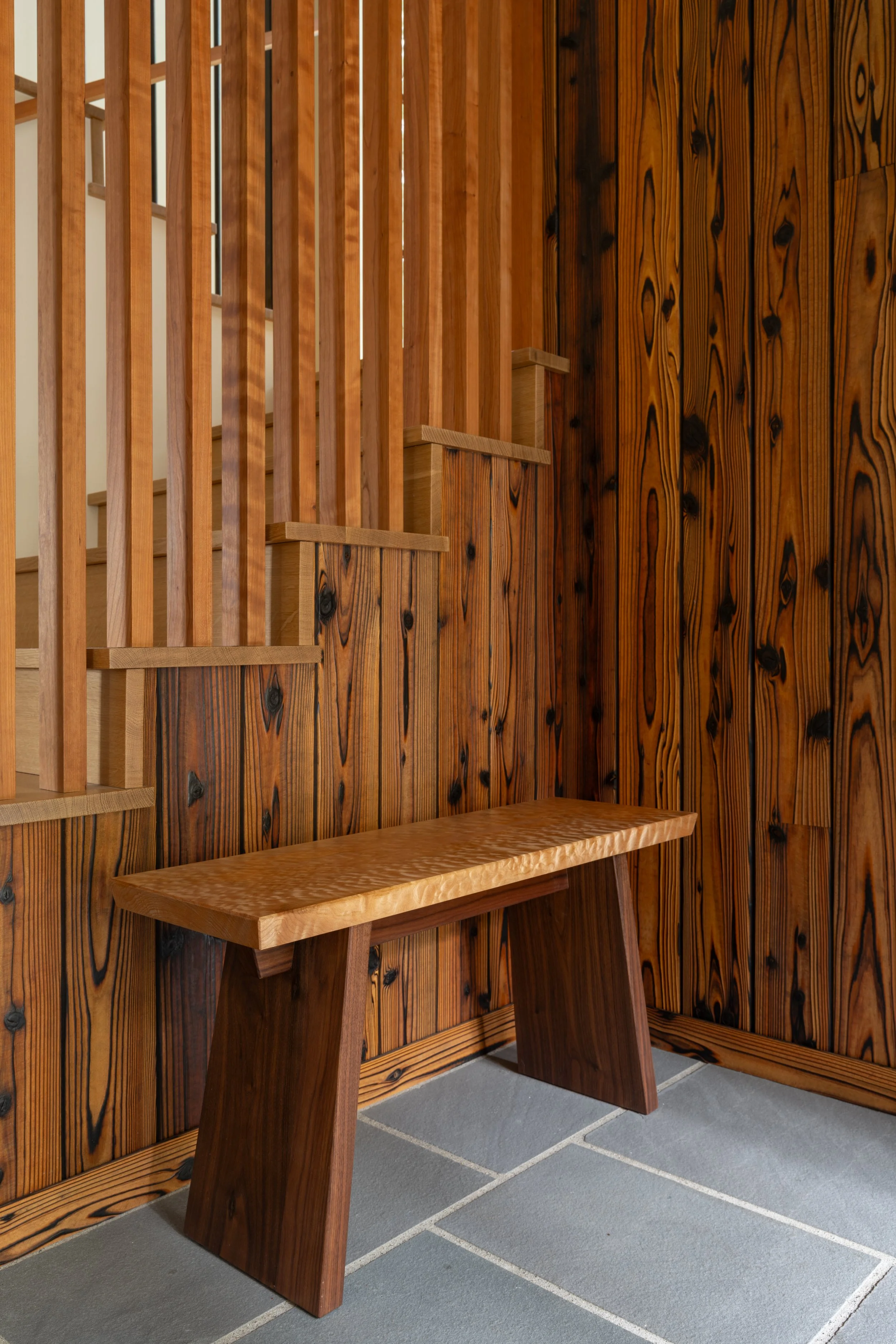
A staircase of large stones leads downhill from the garage to the house. The paving outside the front door flows right inside the house, an example of the ways the architect and the owner sought to connect the indoors and outdoors. That connection is reinforced by the extensive use of wood throughout (over seven different species including oak, cedar and fir). A Japanese technique, shou sugi ban, was used to char some of the cedar boards used on an entry wall and repeated elsewhere.
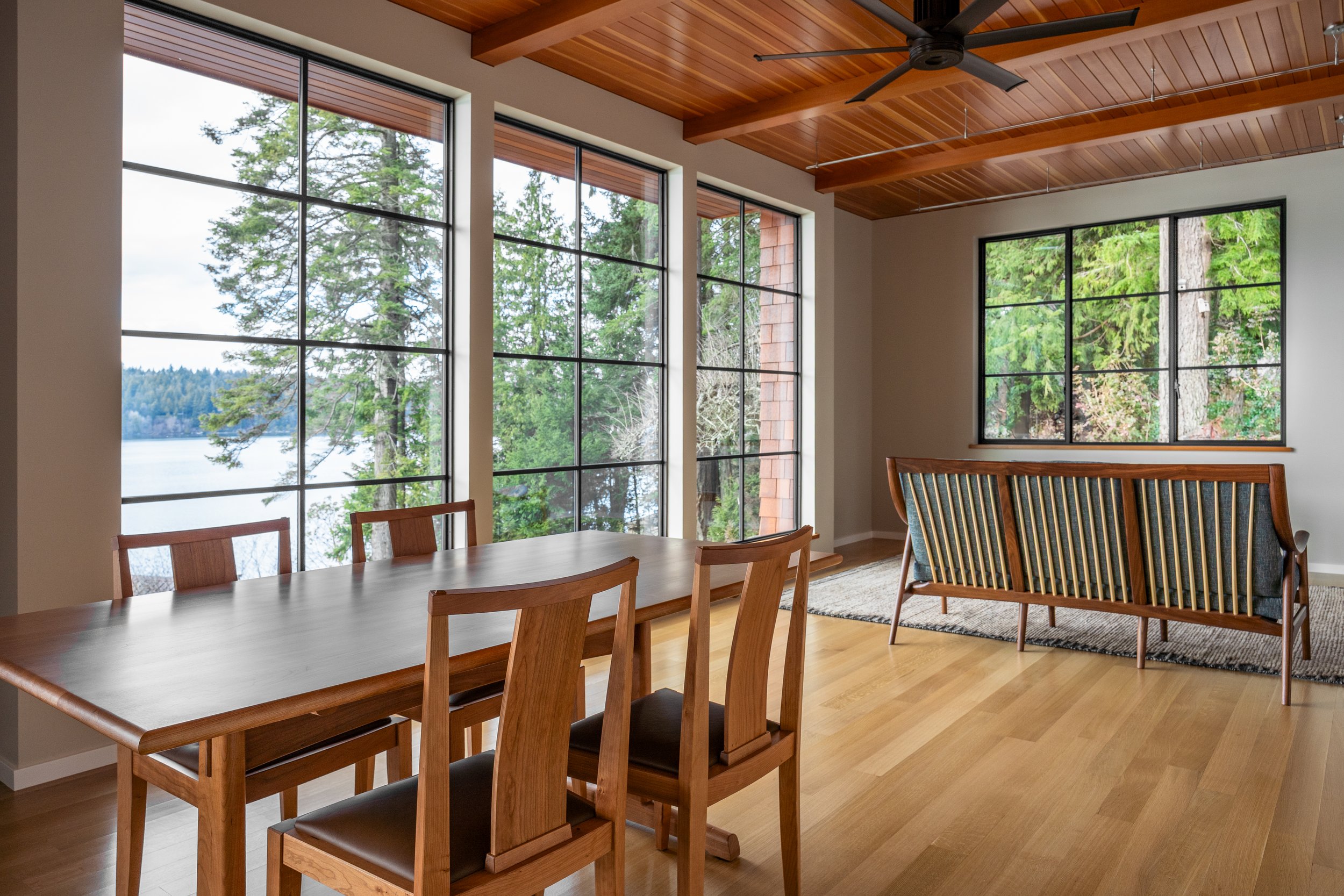
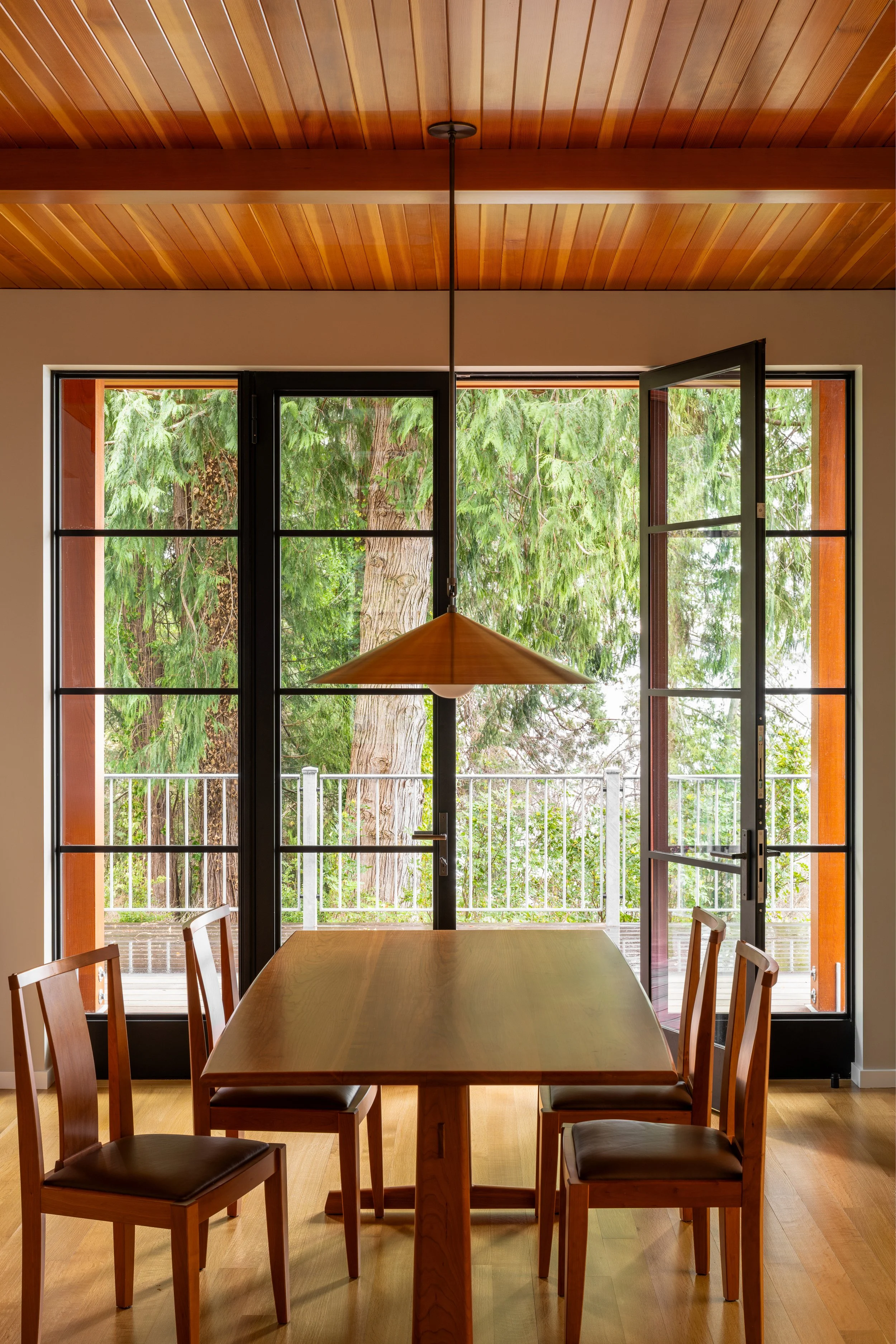
Walking inside, your eyes are drawn across the entry to the main living space and a back wall of floor-to-ceiling windows framing an expansive view of the Port Orchard Narrows. The old house had a center window with two smaller ones on either side. Now there are a larger series of panes separated by delicate steel mullions.
“One thing that is absolutely unique about this house is the steel windows,” says Wenzlau. “The windows really make the house.”
Turkheimer and Wenzlau say the camaraderie they established running together twice a week for two decades was central to how they worked together, first on the boathouse and then the main house.
“This was super collaborative,” says Wenzlau, who has built a portfolio of well-known projects in the area, including Pleasant Beach Village on Bainbridge Island and the Chico Beach Cottages in Silverdale. He has more on tap, including the planned reimagining of the Bainbridge Island Senior Center.
“Fred and I were like a singer and songwriter,” Wenzlau continues. “We’d just go back and forth with ideas and try things. It was very much a shared kind of design experience, which just made the design so much better. It’s been a very unique experience for me and incredibly enjoyable and resulted in something special.”
Turkheimer decamped to the boathouse while the new house was built. Due to pandemic-related delays, it was about five years before he could move into his new home. For someone who had spent his working life on boats, he had no trouble adjusting to his 300-square foot temporary dwelling.
“It’s a nice space. Great for one,” he says, pointing out efficient details like a twin bed that folds up into a couch, the use of small- er-sized kitchen appliances and a bathroom which, like those on a ship, does not have an enclosed shower stall. The showerhead is on a wall near the toilet and sink with the drain in the floor.
Several features they used in the boathouse and its shipshape, efficient use of space are also central to the main house. Closets are seamlessly tucked into walls, and custom-made furniture in the living room emphasizes the clean lines, simplicity and Japanese aesthetic of the design. Turkheimer says he basically chucked everything from the old home. “It was like college furniture. Nothing came with me.”
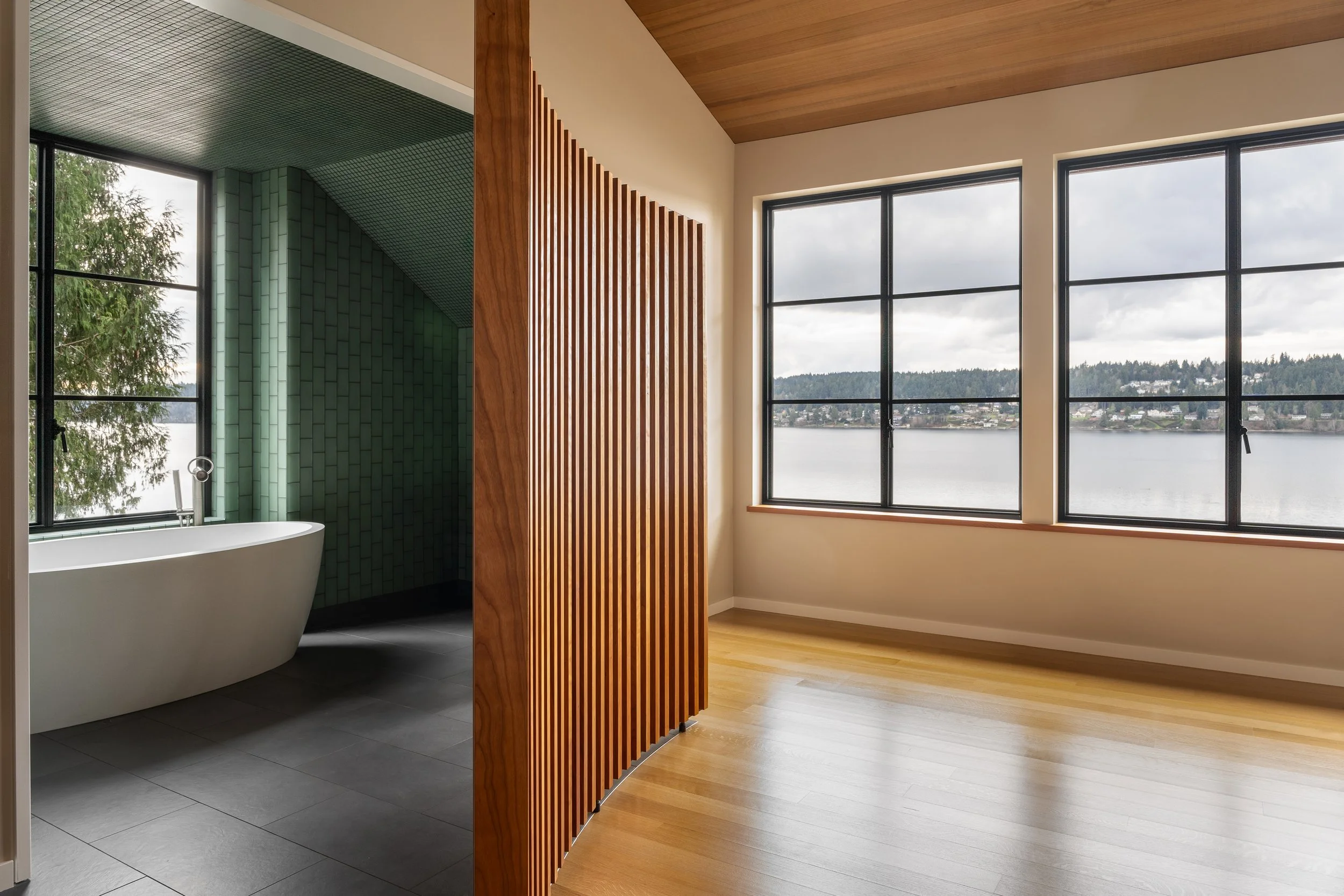
His new three-story home sits like a tower on the hillside property. While the building is a little over 2,000 square feet, it feels larger. The entry on the main level leads to the kitchen and a step down to the living and dining spaces, with a gas stove tucked in the corner. The primary bedroom is upstairs with views out over the water and there’s an elegantly curved, wood partition in front of the bathroom. Glass tile pulls light into the bathroom and covers both the walls and ceiling. A guest room is across the hall, with a second bathroom that uses a different take on glass tile. In addition to the glass tiles, Turkheimer and Wenzlau used handmade Heath tiles in both the boathouse and main house. For example, the living area fireplace is enclosed in a carefully structured arrangement of three different sizes of Heath tiles.
The lower level has two rooms and another bath and leads to a terrace with an outdoor shower and two stone arches facing the slope down to the water. A covered upstairs deck gets the south sun. “This is really the sweet spot outside because it gets the view,” says Wenzlau, adding that the steel railings and other metal details were fabricated by welders Turkheimer worked with in his years fishing.
Metal railings also line the path down to the boathouse. Turkheimer and Wenzlau worked with a landscape architect to bring their design sensibility to the hillside and surrounding paths. “It’s very much like moving through a Japanese garden to get to the temple,” says Wenzlau.
Updates differentiating the original aging home from the new also include radiant heat, a central vacuum system and a heat-recovery ventilation system. But sticking with the same location meant addressing the challenge of a building on a steep hillside. Wenzlau explains that instead of a conventional foundation system, they used a mat slab system consisting of 18-inch thick concrete pads.
“The whole house just sits on this giant square of concrete,” says Wenzlau. “If the hillside was ever to move, it would be like riding a big surfboard.”
THE TEAM
General Contractor: Paul Ogilvie Construction, Poulsbo
Architect: Wenzlau Construction, Bainbridge Island
Concrete: Mark Mccauley, Seabeck
Exterior Siding: Swift Siding, Kingston
Cabinetry: Island Design, Andy Caro, Bainbridge Island
Wood Doors: Northwest Millwork & Door Co., Kingston
Custom Furniture: Robert Spangler, Bainbridge Island
Steel Fabrications: Ballard Sheet Metal, Seattle
Landscape Architect: Fischer Bouma Partnership, ainbridge Island
Landscape Masonry: Will Robinson, Elandan
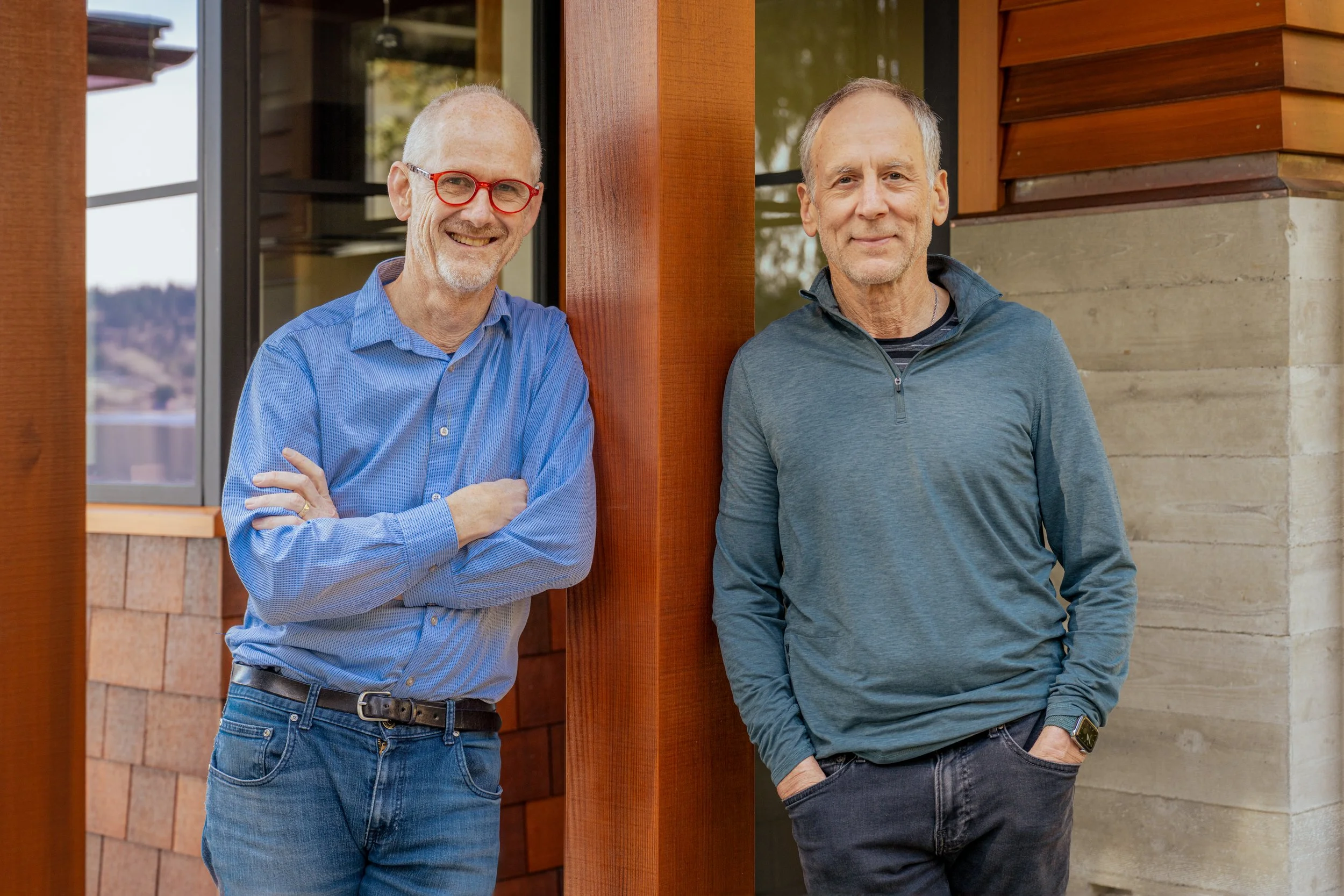
Architect Charlie Wenzlau and homeowner Fred Turkheimer